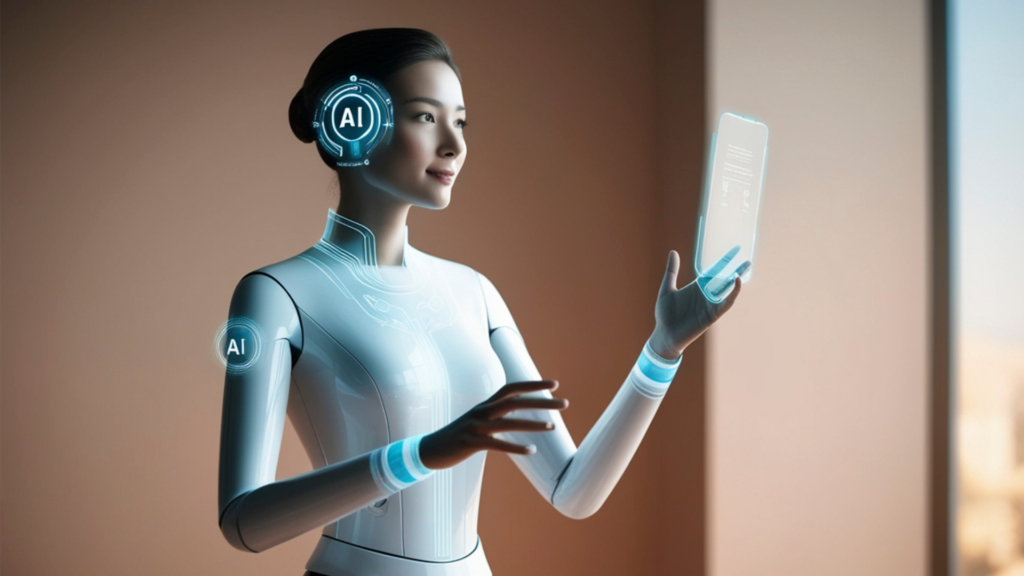
Artificial Intelligence is often discussed in extremes.
Some say it will take over everything.
Others say it’s just another tech trend.
The truth sits quietly in the middle.
By 2026, AI automation won’t feel dramatic or scary. It won’t announce itself. Instead, it will blend into daily life so smoothly that most people won’t even realize how much they rely on it.
This article explores how AI automation will shape everyday routines, work habits, personal organization, and decision-making — not through hype, but through subtle, practical changes that slowly become normal.
AI Automation Is Shifting From “Tools” to “Systems”
Right now, most people think of AI automation as tools:
A chatbot that replies
A scheduler that sets meetings
A tool that writes or edits
But the next phase is different.
By 2026, AI automation will behave more like systems, not individual tools.
Instead of asking AI to do something, AI will:
Notice patterns
Detect inefficiencies
Act quietly in the background
This is the point where AI stops feeling optional and starts feeling essential.
The Automation of Micro-Decisions
Every day, people make hundreds of small decisions:
What to work on first
Which email needs attention
When to take a break
How to prioritize tasks
These decisions drain mental energy.
AI automation will increasingly handle these micro-decisions, leaving humans with more clarity and focus.
Not by controlling choices — but by organizing options intelligently.
Daily Life Will Feel Less Chaotic
One of the biggest benefits of AI automation is mental calm.
By 2026, AI systems will:
Filter unnecessary notifications
Highlight only what matters
Group related tasks automatically
Life won’t slow down — but it will feel more structured.
This reduction in cognitive overload may be one of AI’s most valuable contributions, even if it goes unnoticed.
Smart Personal Organization Without Effort
Most productivity systems fail because they require discipline.
AI automation removes that burden.
Future systems will:
Auto-organize notes
Categorize information contextually
Surface relevant data exactly when needed
You won’t need to manage systems — systems will manage themselves.
That’s when productivity becomes natural instead of forced.
AI Automation in the Workplace
By 2026, AI automation will be deeply embedded in work environments.
Not as flashy software, but as quiet infrastructure.
Examples include:
Automatic meeting summaries
Task progress tracking without manual updates
Early warnings for project delays
Smart workload balancing
Work won’t feel faster.
It will feel cleaner and more intentional.
The End of Busywork
Busywork exists because humans forget, repeat, and miscommunicate.
AI automation thrives where humans struggle.
By 2026, AI will handle:
Status updates
Routine follow-ups
File organization
Process tracking
This frees humans to focus on:
Strategy
Creativity
Collaboration
Problem-solving
Work becomes about impact, not activity.
Automation Without Loss of Control
One common fear is loss of control.
But successful AI automation will be user-governed, not autonomous chaos.
The best systems will:
Ask before acting on critical tasks
Explain why actions are suggested
Allow easy overrides
Trust will come from transparency.
AI that respects boundaries will be welcomed. AI that ignores them will be rejected.
AI Automation in Learning and Skill Development
Learning often fails due to poor structure, not lack of motivation.
AI automation will improve learning by:
Adapting pace automatically
Recommending next topics
Identifying weak areas early
This doesn’t replace teachers or mentors. It supports them.
Learning becomes personalized without becoming isolating.
The Invisible Nature of Future AI Automation
The most powerful automation won’t look impressive.
It won’t have dashboards full of graphs or constant alerts.
It will simply:
Prevent mistakes
Reduce friction
Improve flow
When automation works perfectly, it becomes invisible.
That invisibility is a sign of maturity, not limitation.
How AI Automation Will Affect Small Businesses
Small businesses often struggle with limited time and resources.
AI automation changes that.
By 2026, small teams will use AI to:
Automate operations
Understand customer behavior
Improve decision timing
Reduce operational stress
This levels the playing field between small and large organizations.
Tech-focused platforms like TechAiNex focus on explaining these shifts clearly, helping businesses adopt AI without confusion or fear.
The Ethics of Everyday Automation
As automation increases, ethical questions grow:
Who is responsible when AI makes mistakes?
How much automation is too much?
Where should human judgment always remain?
The future of AI automation depends on intentional design, not blind efficiency.
Ethical automation respects:
Human autonomy
Transparency
Accountability
These values will define which systems earn long-term trust.
Emotional Balance in an Automated World
Automation saves time, but time alone doesn’t create fulfillment.
Humans still need:
Meaning
Creativity
Human connection
AI automation must support life — not replace it.
The goal is not to optimize humans, but to support them.
Skills Humans Must Keep Sharp
As automation grows, some skills become even more important:
Critical thinking
Ethical reasoning
Emotional intelligence
Creativity
AI handles structure. Humans provide direction.
This balance ensures automation remains empowering rather than overwhelming.
Preparing for an Automated Future
You don’t need to learn complex systems.
Preparation means:
Understanding how AI influences decisions
Choosing tools that prioritize transparency
Staying informed about automation trends
Maintaining human skills
Knowledge reduces fear. Awareness builds confidence.
Why AI Automation Will Feel Normal by 2026
The most successful technologies fade into routine.
Electricity. Internet. Smartphones.
AI automation is heading the same way.
By 2026, people won’t say:
“I’m using AI automation.”
They’ll say:
“Things just work better.”
And that’s when transformation is complete.
Final Thoughts
AI automation is not about control, speed, or dominance.
It’s about reducing friction in everyday life.
By quietly handling the background complexity, AI allows humans to focus on what truly matters — ideas, relationships, creativity, and purpose.
The future isn’t louder technology.
It’s quieter, smarter systems working in harmony with human life.