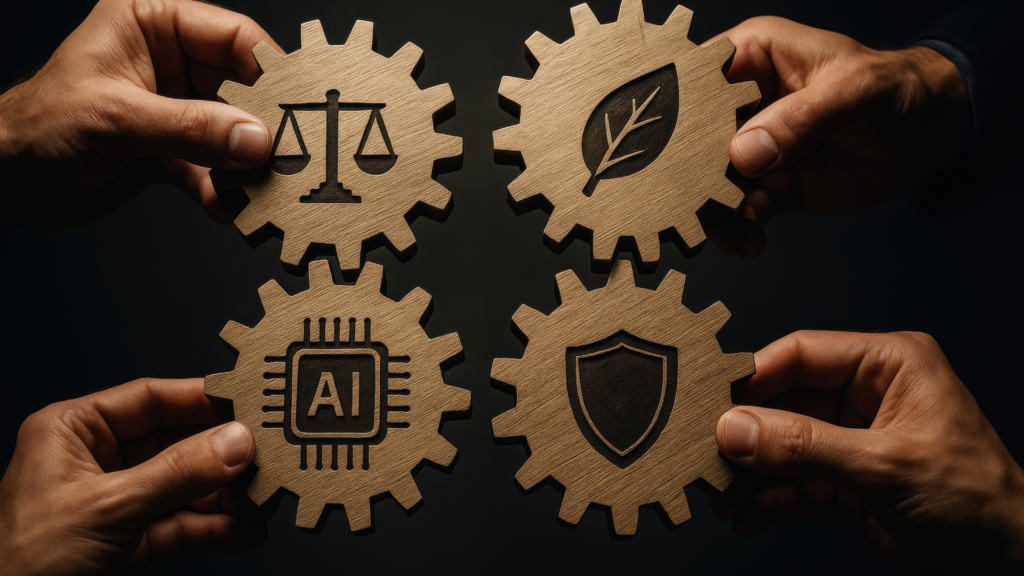
Introduction: Why AI Rules Are Becoming More Important Than AI Power
Artificial intelligence is growing faster than any technology we’ve seen before.
AI writes content.
AI analyzes markets.
AI makes decisions that affect real people.
But here’s the truth most people ignore: technology without rules creates chaos.
As AI becomes more powerful, governments, companies, and users are asking the same question:
👉 Who controls AI, and who is responsible when something goes wrong?
After 2026, AI regulation will no longer be optional. It will become the foundation of digital trust.
This article explores how AI laws, ethical frameworks, and global regulations will shape the future of artificial intelligence—and why trust will matter more than raw innovation.
What Is AI Regulation?
AI regulation refers to laws, policies, and guidelines that control how artificial intelligence is developed, used, and deployed.
These rules focus on:
Data privacy
Transparency
Bias prevention
Accountability
User safety
The goal is simple: protect people without stopping innovation.
Why Governments Are Finally Acting on AI
For years, AI advanced faster than policy.
But now:
AI influences elections
AI affects hiring decisions
AI impacts healthcare and finance
AI can spread misinformation
Governments can no longer ignore its power.
After 2026, AI regulation will shift from discussion to enforcement.
The Biggest AI Regulation Trends After 2026
1. Transparency Will Be Mandatory
Future AI systems will be required to:
Explain how decisions are made
Show data sources
Allow audits
Black-box AI will slowly disappear.
2. AI Accountability Laws
If an AI system causes harm:
Someone must be responsible
Companies cannot hide behind algorithms
This will change how AI products are built and marketed.
3. Data Privacy Will Get Stricter
AI systems will face:
Limits on personal data use
Clear consent requirements
Stronger user rights
Trust begins with privacy.
AI Regulation vs Innovation: The Real Balance
Many fear that regulation will kill innovation.
In reality, smart regulation:
Builds public trust
Encourages responsible development
Creates long-term stability
The future belongs to companies that build ethical AI by design.
How AI Regulation Affects Businesses
Businesses will need to:
Document AI decisions
Monitor bias
Train teams on compliance
Invest in explainable AI
This may slow shortcuts—but it strengthens credibility.
AI Regulation and Startups
Startups will benefit too.
Clear rules:
Reduce uncertainty
Attract ethical investors
Build user confidence
Trust-driven products will win.
AI Regulation in Content & Media Platforms
For platforms like TechAiNex, AI regulation will influence:
Content moderation
AI-generated material disclosure
Data handling practices
Transparency will improve credibility and AdSense trust.
AI and Misinformation Control
One major focus of future AI laws will be:
Deepfakes
Fake news
Manipulated content
AI platforms will need detection systems, not just generation tools.
Ethical AI Will Become a Brand Advantage
After 2026, users will ask:
Is this AI fair?
Is my data safe?
Can I trust this platform?
Ethics will become a competitive advantage, not a limitation.
Global Differences in AI Regulation
AI laws will vary:
Europe: strict and rights-focused
USA: innovation-friendly but selective
Asia: fast adoption with control
Companies must adapt globally.
AI Regulation and the Future of Jobs
AI laws will also protect:
Worker rights
Hiring transparency
Algorithmic fairness
This ensures AI supports people instead of exploiting them.
Why Digital Trust Will Matter More Than Speed
The fastest AI won’t win.
The most trusted AI will.
Users will choose platforms that:
Respect privacy
Explain decisions
Offer control
Trust is the new currency.
How Companies Should Prepare Now
To stay future-ready:
Adopt ethical AI practices
Document AI workflows
Educate teams
Prioritize user trust
Preparation today prevents problems tomorrow.
AI Regulation Will Shape the Next Tech Leaders
The next generation of tech giants will be:
Transparent
Responsible
Trust-focused
Regulation won’t stop progress—it will define who leads it.
Final Thoughts: The Future of AI Is About Responsibility
After 2026, AI success won’t be measured by power alone.
It will be measured by:
Trust
Fairness
Safety
Accountability
AI regulation is not a threat.
It is the foundation of a sustainable AI future.