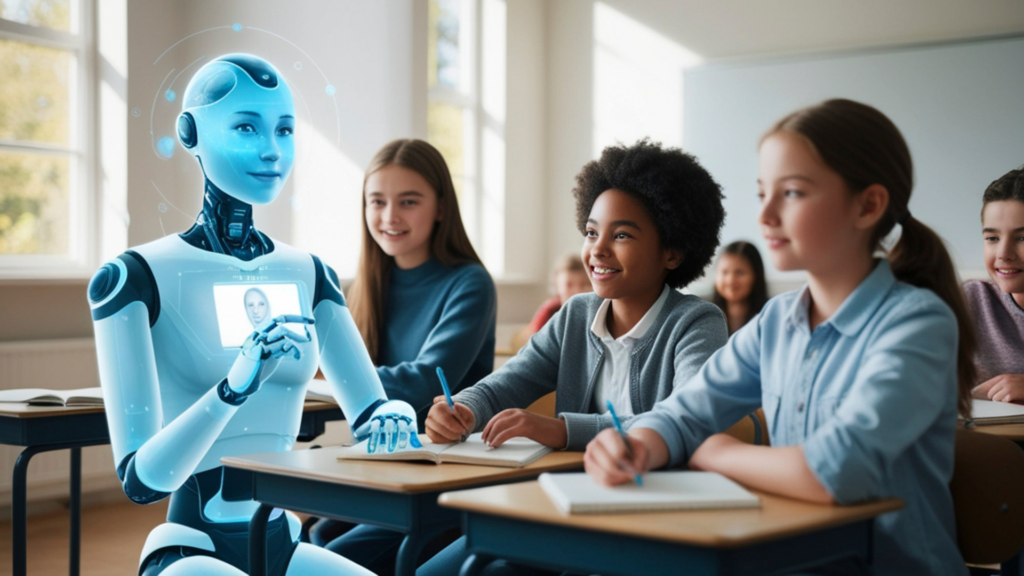
AI + Education in 2026: How Artificial Intelligence Is Transforming the Way We Learn
Education has always evolved with time. From blackboards to digital classrooms, every generation has experienced change. But the transformation taking place in 2026 feels fundamentally different. Artificial intelligence is not just adding tools to education — it is reshaping how learning itself works.
Students today do not learn at the same pace, in the same way, or with the same challenges. Traditional education systems were built around uniform methods. AI breaks that limitation by creating learning experiences that adapt to individuals rather than forcing individuals to adapt to systems.
This shift is redefining what education means in the modern world.
From Standardized Learning to Personalized Journeys
For decades, education followed a one-size-fits-all approach. Everyone studied the same syllabus, at the same speed, through the same methods. This often left many students struggling silently.
In 2026, AI changes this completely.
Learning platforms analyze how students read, respond, revise, and retain information. If someone learns better visually, content adapts. If another student struggles with concepts, explanations slow down and simplify automatically.
Education becomes personal rather than pressured.
Students feel supported instead of compared.
AI Tutors as Everyday Learning Companions
One of the biggest developments is the rise of AI tutors.
These systems are available 24/7. They explain topics in simple language, repeat concepts without frustration, and adjust explanations based on understanding.
Unlike traditional classrooms where students hesitate to ask questions, AI tutors create a judgment-free space.
This increases confidence and curiosity.
Learning becomes continuous, not limited to classrooms.
Redefining the Role of Teachers
AI does not replace teachers — it reshapes their role.
Instead of spending hours grading or repeating explanations, educators focus more on mentorship, creativity, and emotional support.
AI handles routine tasks. Teachers focus on human connection.
This balance creates healthier learning environments.
Technology supports educators instead of overwhelming them.
Intelligent Assessments and Real Understanding
Traditional exams measure memory more than understanding.
AI-based assessments in 2026 focus on learning patterns, progress, and problem-solving ability.
Instead of one-time exams, performance is evaluated continuously.
Students are judged on growth, not pressure.
This reduces exam anxiety and promotes deeper learning.
Learning Beyond Classrooms
Education no longer ends with school or college.
AI-powered platforms support lifelong learning.
Professionals upskill through personalized learning paths. Courses adapt to career goals. Knowledge updates automatically as industries evolve.
Learning becomes a continuous journey rather than a phase of life.
Language Learning and Global Access
AI translation and speech recognition have broken language barriers.
Students can learn content in their preferred language while accessing global knowledge.
This democratizes education.
Geography and language no longer limit opportunity.
Education in Remote and Underserved Areas
One of AI’s greatest impacts is accessibility.
In regions lacking teachers or infrastructure, AI-powered education tools provide consistent learning opportunities.
Students gain access to quality education regardless of location.
Technology becomes a bridge rather than a barrier.
Emotional Intelligence in Learning Systems
Modern AI systems also track emotional engagement.
If a student appears overwhelmed or disengaged, learning pace adjusts automatically.
This emotional awareness improves retention and motivation.
Education becomes kinder.
Challenges and Ethical Considerations
Despite progress, challenges exist.
Data privacy, screen dependence, and digital inequality require careful management.
AI must be used responsibly and transparently.
Education thrives only when trust exists.
The Human Core of Education
No algorithm can replace inspiration.
No machine can replace empathy.
AI provides structure and support, but human educators provide meaning.
The future of education lies in collaboration between technology and humanity.
What Education Looks Like Beyond 2026
The future points toward immersive learning through virtual reality, adaptive simulations, and skill-based certifications.
Degrees will matter less than demonstrated ability.
Learning will focus on creativity, critical thinking, and adaptability.
AI will support — not dictate — this evolution.
Final Thoughts
AI is not changing education by making it faster.
It is changing education by making it fairer, more flexible, and more human.
When technology adapts to learners instead of learners adapting to systems, education truly evolves.
In 2026, learning is no longer about keeping up.
It is about growing forward.