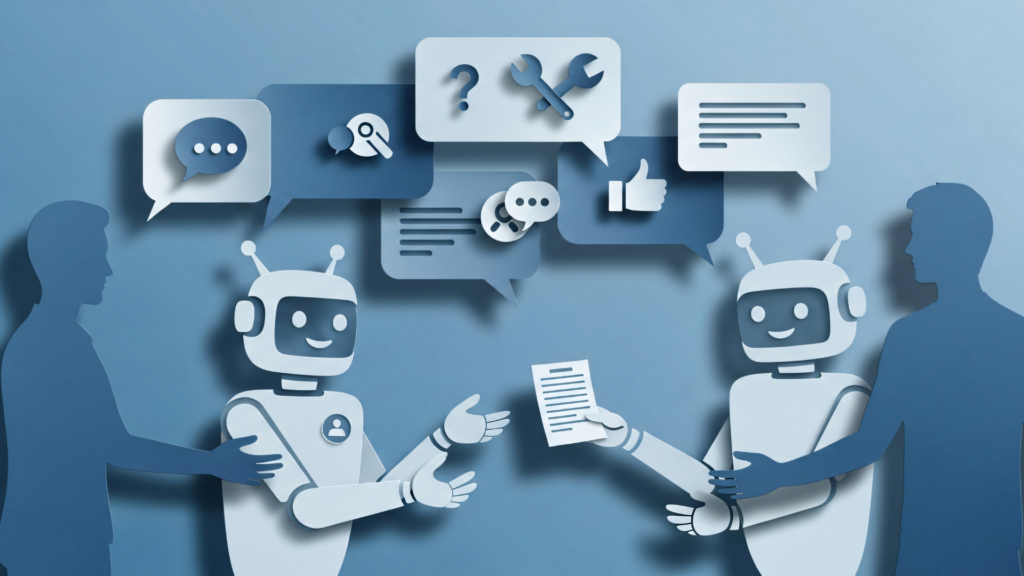
Work has always evolved with technology. From machines in factories to computers in offices, every innovation has reshaped how people earn a living. But artificial intelligence is different. It is not just a tool that speeds up work — it changes the very definition of work itself. By 2026, this transformation is no longer theoretical. It is happening quietly inside companies, startups, and even individual careers.
The conversation around AI often focuses on fear. Job loss, automation, and replacement dominate headlines. But reality is far more complex. AI is not simply removing jobs; it is redistributing human effort. Some roles are disappearing, many are changing, and entirely new paths are emerging.
Understanding this shift is essential for anyone who wants to stay relevant in the coming years.
The Workplace Is No Longer a Physical Space
For decades, work was associated with offices, fixed schedules, and locations. AI has accelerated the breakdown of this model. By 2026, work is increasingly task-based rather than place-based.
AI-powered platforms manage workflows, track outcomes, and coordinate global teams. Employees collaborate across time zones with minimal friction. Meetings are summarized automatically. Tasks are prioritized intelligently.
The result is not chaos — it is flexibility.
Work is becoming something you do, not somewhere you go.
Routine Work Is Slowly Disappearing
One of the clearest impacts of AI is on repetitive tasks.
Data entry, scheduling, basic analysis, reporting, and customer queries are now largely automated. AI handles these processes faster and with fewer errors.
This does not mean people become useless.
It means humans are finally being freed from work that never required creativity in the first place.
In 2026, productivity is measured less by hours and more by impact.
New Roles Are Emerging Quietly
While some traditional roles shrink, new ones are forming — often without formal titles yet.
People now work as AI workflow designers, prompt strategists, automation consultants, digital ethics advisors, and human-AI coordinators.
These roles did not exist five years ago.
They exist because businesses need people who understand both technology and human behavior.
The most valuable professionals are no longer those who do everything manually, but those who know how to guide intelligent systems effectively.
Skills Matter More Than Degrees
The future of work is skill-driven.
AI is reshaping hiring practices. Employers increasingly prioritize ability over certificates. Real-world problem-solving, adaptability, and learning speed matter more than formal education alone.
In 2026, professionals constantly update skills through short learning modules, hands-on projects, and digital platforms.
Learning is continuous, not stage-based.
Careers are becoming flexible journeys rather than fixed ladders.
Human Skills Are Becoming More Valuable
Ironically, as AI becomes more intelligent, human qualities become more important.
Empathy, communication, judgment, creativity, leadership, and emotional understanding cannot be automated easily.
AI can analyze information, but it cannot truly understand human emotion.
Roles that involve trust, decision-making, mentoring, and strategy are growing in importance.
In the future workplace, being human is a competitive advantage.
AI Is Changing How Performance Is Measured
Traditional performance metrics focused on attendance, hours worked, and output volume.
AI-driven workplaces evaluate outcomes instead.
Smart systems track results, quality, and efficiency without micromanagement.
Employees gain more autonomy.
This shift increases accountability but also freedom.
People are trusted to manage their time as long as they deliver value.
Freelancing and Independent Work Are Rising
AI has lowered the barrier to entrepreneurship.
Individuals can now build businesses, manage clients, create content, automate operations, and scale services with minimal resources.
Solo professionals compete with larger organizations using AI as leverage.
By 2026, the number of solopreneurs and independent workers continues to grow rapidly.
Work becomes personal again.
Companies Are Restructuring Teams
Organizations are becoming leaner.
Instead of large departments, companies rely on small expert teams supported by AI tools.
Decision-making becomes faster. Communication becomes clearer.
Hierarchy reduces.
Agility increases.
The modern workplace values speed and adaptability over size.
Mental Health and Work Balance Are in Focus
As productivity increases, expectations also rise.
This creates pressure.
In response, many organizations in 2026 are focusing on sustainable work models.
AI helps monitor workload patterns and burnout risks.
Flexible schedules and asynchronous work become common.
Success is no longer defined by exhaustion.
Healthy productivity becomes the goal.
Reskilling Is Becoming a Survival Strategy
The most dangerous mindset in the AI era is resistance.
Technology will continue evolving regardless of individual comfort.
Those who succeed are those who learn continuously.
Reskilling is no longer optional — it is essential.
Fortunately, AI also makes learning easier by personalizing content and reducing time investment.
Growth becomes accessible.
Ethical Questions Shape the Workplace
As AI makes decisions, ethical responsibility increases.
Who is accountable when algorithms fail?
How are biases prevented?
How is transparency ensured?
By 2026, organizations are developing ethical AI frameworks.
Human oversight remains mandatory.
Trust is non-negotiable.
The Identity Shift Around Work
Perhaps the biggest change is psychological.
People no longer define themselves solely by job titles.
Work becomes one part of identity, not the entire identity.
This shift supports healthier relationships with careers and personal life.
Meaning replaces mere employment.
The Role of Leadership Is Evolving
Leaders are no longer controllers of tasks.
They become vision-setters, culture-builders, and decision-guides.
AI provides data.
Humans provide direction.
This partnership defines effective leadership in 2026.
The Future Is Collaborative, Not Competitive
AI does not compete with humans.
It complements them.
The most successful professionals are those who collaborate with intelligent systems rather than fear them.
The future of work is not man versus machine.
It is human plus machine.
Final Thoughts
The future of work in 2026 is not about replacement.
It is about transformation.
Jobs change. Skills evolve. Roles shift.
But purpose remains.
AI removes friction, not meaning.
Those who adapt will find more freedom, creativity, and opportunity than ever before.
Work is not disappearing.
It is becoming smarter — and more human.