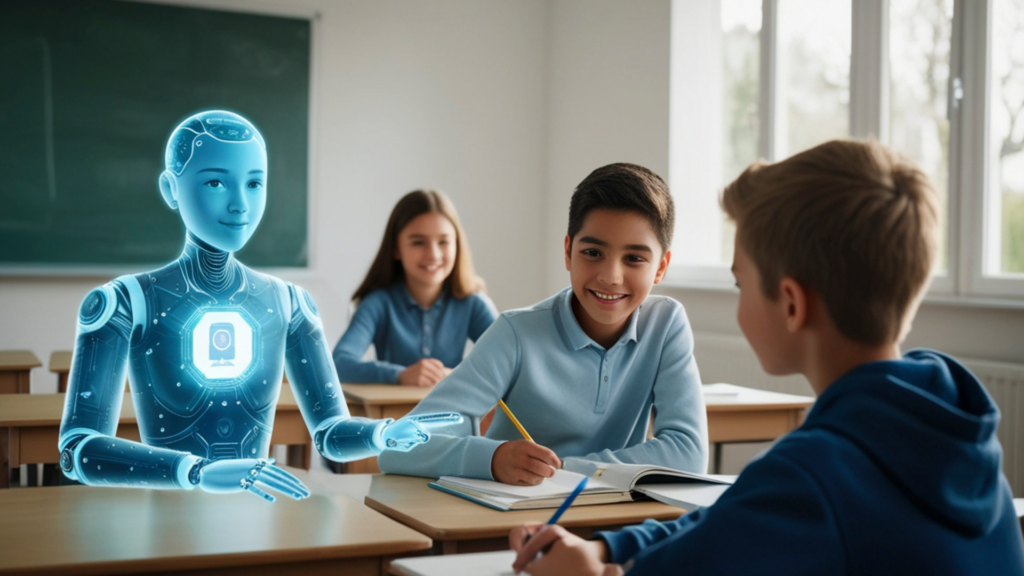
Education has always shaped the future of society. But for decades, the system remained mostly unchanged. Classrooms followed fixed schedules, standardized lessons, and one-size-fits-all teaching. By 2026, artificial intelligence is finally breaking this pattern — not by replacing teachers, but by transforming how learning happens.
AI is slowly turning education into a personalized journey rather than a rigid process. Students are no longer expected to learn at the same pace or in the same way. Technology is adapting to the learner, not the other way around.
This shift is redefining education at every level.
From Standard Classrooms to Personalized Learning
In traditional education, all students receive the same lesson at the same time. But every learner is different. Some understand quickly, others need repetition, and many learn better visually or practically.
AI-powered learning systems in 2026 analyze how students interact with content. They identify strengths, weaknesses, and preferred learning styles.
Lessons automatically adjust difficulty, format, and pace.
This personalization helps students stay engaged and confident rather than overwhelmed or bored.
Teachers Are Becoming Learning Mentors
One of the biggest misconceptions is that AI will replace teachers.
In reality, teachers are becoming more important.
AI handles grading, attendance, progress tracking, and content recommendations. This frees educators from repetitive administrative work.
Teachers now focus on mentoring, guiding discussions, supporting emotional development, and encouraging creativity.
The classroom becomes more interactive and human-centered.
Learning Beyond the Classroom Walls
Education in 2026 no longer depends entirely on physical classrooms.
AI-powered platforms allow students to learn anytime, anywhere.
Virtual tutors answer questions instantly. Smart study planners organize revision schedules. Interactive simulations explain complex concepts visually.
Learning becomes continuous rather than limited to school hours.
This flexibility benefits students from all backgrounds.
Early Identification of Learning Gaps
One of AI’s most powerful contributions is early intervention.
AI systems detect learning gaps before they become serious problems. If a student struggles with a topic, additional support is provided automatically.
Teachers receive alerts and insights.
This prevents long-term academic setbacks and boosts student confidence.
Inclusive Education Is Improving
Students with learning disabilities often struggle in traditional systems.
AI-driven tools now support speech-to-text, text-to-speech, visual learning aids, and adaptive assessments.
These tools help create equal learning opportunities.
Education becomes more inclusive and accessible.
Assessment Is Becoming Smarter
Exams are evolving.
Instead of testing memory alone, AI-based assessments evaluate understanding, application, and problem-solving.
Continuous assessment replaces high-pressure exams.
Students demonstrate knowledge through projects, analysis, and creativity.
Learning becomes meaningful rather than mechanical.
Lifelong Learning Is Becoming Normal
In 2026, education does not stop after graduation.
AI-driven learning platforms support professionals throughout their careers.
People upskill, reskill, and adapt continuously.
Short learning modules replace long theoretical courses.
This keeps individuals relevant in a fast-changing job market.
Data-Driven Curriculum Improvement
Educational institutions now analyze performance data to improve curriculum design.
AI identifies which topics students struggle with most.
Content is updated based on real learning behavior rather than assumptions.
Education evolves dynamically.
Emotional Wellbeing and Learning
AI tools also track engagement and stress indicators.
If students show signs of burnout, systems suggest breaks or alternate learning formats.
Mental wellbeing becomes part of academic success.
This holistic approach supports healthier learning environments.
Challenges and Ethical Considerations
Despite benefits, AI in education requires responsibility.
Data privacy, screen time balance, and algorithm bias must be carefully managed.
Human oversight remains essential.
Technology must support learning, not dominate it.
The Future Classroom Experience
The classroom of 2026 feels collaborative.
Students participate actively. Teachers guide discussions. Technology supports learning quietly.
Education becomes curiosity-driven instead of exam-driven.
The joy of learning slowly returns.
Final Thoughts
AI is not replacing education.
It is restoring its purpose.
By removing rigid structures and repetitive tasks, AI allows learning to become more personal, inclusive, and engaging.
In 2026, education is no longer about memorizing information.
It is about understanding, applying, and growing.
Technology supports that journey — but humanity remains at its heart.