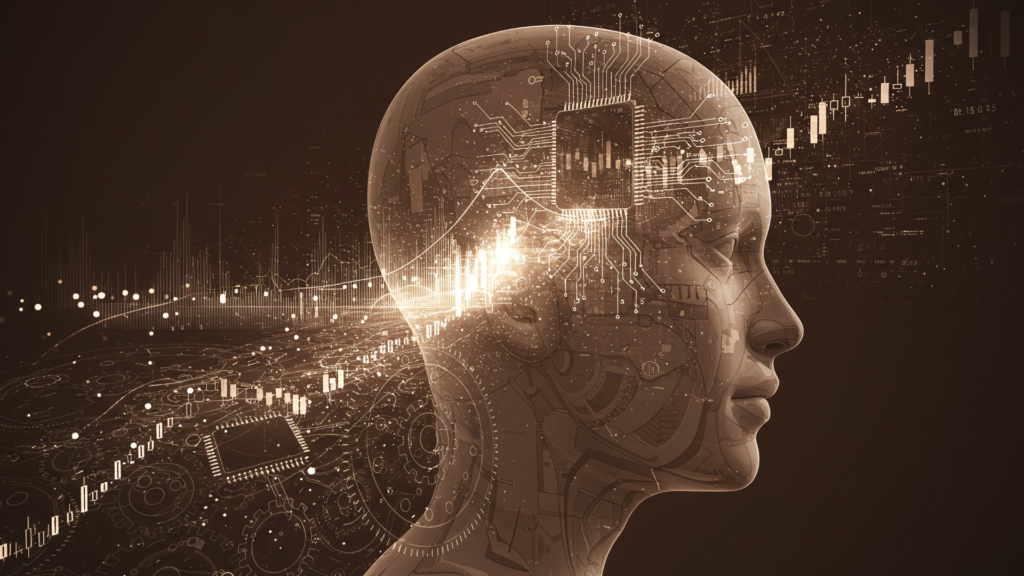
Human memory was never designed for the digital age.
We remember conversations but forget details.
We save files but can’t find them later.
We consume information daily but struggle to recall it when it matters most.
For decades, technology tried to solve this problem using storage—hard drives, cloud folders, bookmarks, and notes. But storage alone doesn’t equal memory.
That’s where a new shift is happening.
By 2026, personal AI memory systems will begin to change how humans remember, retrieve, and use information. Not by replacing the human brain—but by extending it.
Quietly. Intelligently. Responsibly.
Why Memory Is the Real Bottleneck of Productivity
People don’t lack information.
They lack recall.
Modern productivity problems often come from:
Forgetting past insights
Losing track of decisions
Repeating work unnecessarily
Searching endlessly for information already seen
AI tools have automated tasks—but memory remains fragmented across apps and platforms.
Personal AI memory aims to fix this.
What Is Personal AI Memory?
Personal AI memory is not simple data storage.
It is a system that:
Observes what you work on
Understands context
Organizes information automatically
Retrieves relevant knowledge when needed
Instead of asking, “Where did I save this?”
You ask, “What did I decide last time?”
And the system remembers.
How Personal AI Memory Is Different From Notes and Files
Traditional systems are passive.
They wait for you to:
Name files
Organize folders
Remember locations
AI memory is active.
It:
Connects related ideas
Tracks timelines
Understands relevance
Learns what matters to you
This is a fundamental shift—from manual recall to assisted cognition.
The Role of Context in Memory
Human memory is contextual.
We remember:
Why something mattered
What we felt
What decision followed
Personal AI memory systems are being designed to capture this context—not just content.
For example:
Why a meeting mattered
What problem was being solved
Which idea was rejected and why
This makes recall meaningful, not mechanical.
How AI Memory Will Change Daily Work
By 2026, professionals may rely on AI memory to:
Recall past project decisions
Track evolving ideas
Avoid repeating mistakes
Resume work instantly after breaks
Instead of starting over, people continue forward.
Productivity becomes cumulative.
Reducing Cognitive Load Without Reducing Thinking
One fear around AI is mental dependency.
But AI memory systems are designed to reduce cognitive load, not replace thinking.
They handle:
Storage
Organization
Retrieval
Humans handle:
Judgment
Creativity
Decision-making
This balance preserves autonomy.
Personal AI Memory in Creative Fields
Creativity thrives on connections.
Writers, designers, and strategists often revisit:
Old drafts
Half-formed ideas
Abandoned concepts
AI memory allows creators to:
Rediscover forgotten ideas
See patterns across work
Build on their own thinking over time
Creativity becomes layered, not linear.
Learning Becomes Continuous Instead of Fragmented
Students and lifelong learners face a common issue: forgetting what they’ve already learned.
AI memory systems can:
Track learning progress
Recall concepts when relevant
Reinforce connections over time
Learning stops being episodic and becomes continuous.
Privacy Concerns and Why They Matter
Memory is deeply personal.
That’s why future AI memory systems are focusing on:
Local-first storage
User-controlled data
Transparent access rules
The goal isn’t surveillance.
The goal is trust.
Without trust, AI memory will never be adopted.
Ownership of Memory Will Be Non-Negotiable
One principle is becoming clear:
Your memory must belong to you.
Future systems will allow:
Full export
Selective deletion
Clear visibility
AI memory works only if users feel in control.
The End of “Searching” as We Know It
Search assumes you know what you’re looking for.
AI memory assumes you don’t.
Instead of keywords, it relies on:
Intent
Context
Relevance
You don’t search files.
You ask questions.
How Personal AI Memory Helps Decision-Making
Decisions are rarely isolated.
They’re based on:
Past experiences
Previous outcomes
Lessons learned
AI memory helps surface these insights at the right time—before decisions are made.
This improves quality, not speed.
The Impact on Knowledge Workers
Knowledge workers often lose value to disorganization.
AI memory helps by:
Preserving institutional knowledge
Reducing onboarding friction
Preventing knowledge loss
This benefits individuals and organizations alike.
Why This Matters for Platforms Like TechAiNex
As AI evolves, people need clarity—not hype.
Understanding concepts like personal AI memory helps audiences:
Adopt technology responsibly
Avoid unrealistic expectations
Stay informed without fear
Educational platforms play a key role in shaping this understanding.
Avoiding the “Digital Amnesia” Trap
Relying entirely on external memory can weaken natural recall.
That’s why future AI systems are being designed to:
Support reflection
Encourage understanding
Reinforce learning
AI memory complements the human brain—it doesn’t replace it.
The Future of Personal Knowledge
Personal AI memory represents a new layer of intelligence.
Not artificial.
Not human.
But collaborative.
It helps people remember better, think clearer, and build knowledge over time.
Why Adoption Will Be Gradual
This shift won’t happen overnight.
Memory is intimate.
Trust takes time.
But once people experience frictionless recall, there’s no going back.
Final Thoughts
The future of productivity isn’t faster typing or smarter automation.
It’s better memory.
By 2026, personal AI memory systems may become the quiet foundation behind smarter work, deeper learning, and clearer thinking.
Not by doing more for us.
But by helping us remember what already matters.