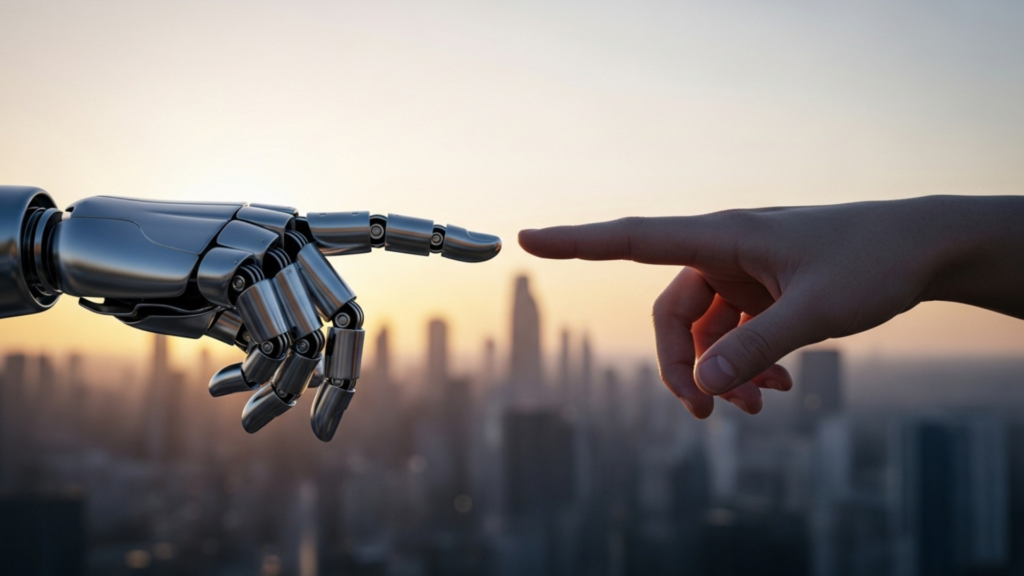
Artificial Intelligence is changing how work gets done.
Not dramatically.
Not overnight.
But steadily and quietly.
Many people imagine the future of work as a battlefield between humans and machines. In reality, it looks very different. By 2026, AI will not replace most workers—but it will reshape what valuable work looks like.
The biggest shift won’t be job titles disappearing.
It will be skills losing relevance and new ones becoming essential.
This article explores how AI is redefining work, which human skills will matter most by 2026, and how individuals can stay relevant without becoming technical experts.
Why the Meaning of “Work” Is Already Changing
Work used to mean effort.
The more time and energy you invested, the more valuable you were perceived to be.
AI breaks that model.
When machines can:
Write faster
Analyze deeper
Process endlessly
Effort alone is no longer enough.
By 2026, value will come from judgment, clarity, creativity, and decision-making, not raw output.
AI Will Take Tasks, Not Purpose
One of the biggest misunderstandings about AI is the fear of total replacement.
In reality, AI is excellent at:
Repetition
Pattern recognition
Data processing
But it struggles with:
Ambiguity
Ethics
Human emotion
Meaning and intent
This means AI will take over tasks, not purpose. Humans will still be needed to decide why something should be done—not just how.
Skill #1: Critical Thinking Will Become Non-Negotiable
As AI provides answers instantly, the ability to question those answers becomes more important than ever.
By 2026, critical thinking will mean:
Evaluating AI-generated suggestions
Identifying bias or blind spots
Understanding context beyond data
People who blindly accept AI output will make mistakes faster.
People who challenge it intelligently will lead.
Skill #2: Decision Ownership in an AI-Supported World
AI will suggest options.
It will not take responsibility.
Humans must still:
Choose between alternatives
Accept consequences
Make ethical calls
This skill—decision ownership—will define leadership in the AI era.
Good professionals won’t just ask, “What does AI suggest?”
They’ll ask, “Does this align with our goals and values?”
Skill #3: Emotional Intelligence Will Matter More, Not Less
AI can simulate conversation, but it does not feel.
Work still involves:
Conflict
Motivation
Trust
Collaboration
By 2026, emotional intelligence will become a major differentiator, especially in:
Leadership
Customer relationships
Team management
Those who understand people will always outperform those who only understand systems.
Skill #4: Creative Thinking Beyond Generation
AI can generate content.
What it cannot do well is original direction.
Creativity in the future won’t be about producing more ideas—it will be about:
Choosing the right idea
Shaping narrative and meaning
Connecting ideas across domains
Humans will remain the source of originality. AI will act as an amplifier, not a creator of purpose.
Skill #5: Learning How to Learn (Fast)
The half-life of skills is shrinking.
By 2026, professionals will need to:
Learn continuously
Adapt quickly
Unlearn outdated methods
AI will assist learning, but humans must drive curiosity.
Those who treat learning as a habit—not a phase—will stay relevant regardless of role.
The Shift from “Doers” to “Thinkers”
Historically, work rewarded execution.
In an AI-powered world:
Execution becomes cheaper
Thinking becomes premium
People who can:
Define problems clearly
Set direction
Interpret results
Will be more valuable than those who only follow instructions.
This is a major cultural shift—and many are unprepared for it.
How AI Will Redefine Entry-Level Work
Entry-level jobs traditionally involved routine tasks.
AI will automate many of those.
But that doesn’t eliminate opportunity—it changes it.
By 2026, early-career professionals will need to:
Develop judgment sooner
Learn how systems work
Build context awareness early
Those who rely only on task execution will struggle. Those who think strategically will rise faster.
Human Skills AI Cannot Replace
No matter how advanced AI becomes, certain skills remain human:
Moral reasoning
Empathy
Long-term vision
Cultural understanding
These skills are not optional anymore. They are career insurance.
AI as a Career Multiplier, Not a Threat
People who work with AI will outperform those who ignore it.
AI can:
Reduce mental overload
Speed up analysis
Surface insights
Humans then:
Interpret
Decide
Lead
The real risk is not AI replacing jobs—it’s people refusing to adapt.
Platforms like TechAiNex focus on explaining these shifts in simple language, helping readers prepare without fear or hype.
Workplace Culture Will Also Change
By 2026, workplaces will value:
Outcomes over hours
Insight over activity
Adaptability over seniority
This shift will benefit those who think clearly, communicate well, and stay curious.
How Individuals Can Prepare Today
You don’t need to become an AI engineer.
Instead:
Practice critical thinking daily
Improve communication and empathy
Learn how AI tools influence decisions
Focus on transferable human skills
The goal is not to compete with AI—but to complement it.
Why the Future of Work Is Still Human
Despite all advancements, work is still about people.
AI changes how work is done, not why.
Meaning, responsibility, creativity, and leadership remain human domains.
By 2026, success won’t come from resisting AI or worshipping it—but from understanding it and using it wisely.
Final Thoughts
The future of work is not disappearing—it’s evolving.
AI will handle complexity.
Humans will handle meaning.
Those who build human skills alongside AI tools will not just survive the transition—they’ll thrive in it.
And that balance will define the next decade of work.