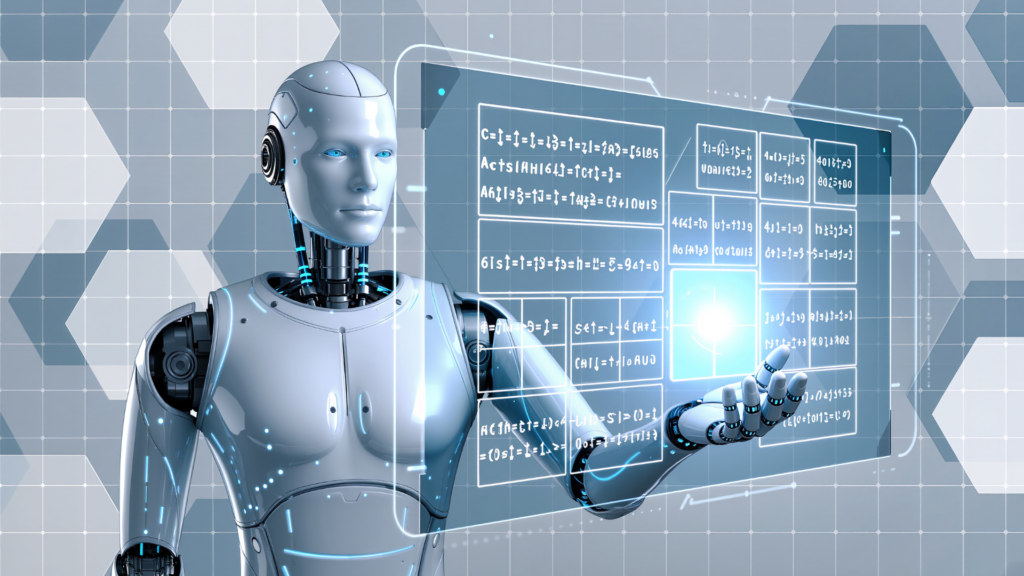
If someone had asked ten years ago what the world would look like with advanced technology, most people would imagine flying cars, robot police, or futuristic cities covered in neon lights. But 2025 looks nothing like those predictions. Instead of dramatic sci-fi scenes, we got something subtler, something quieter — a world where technology blended into our daily life so smoothly that most people didn’t even notice.
AI didn’t come with noise.
AI came like oxygen — silent but essential.
Today, when we look around, it’s almost impossible to imagine a day without AI-driven tools guiding us, assisting us, and even predicting what we need next. From the phones in our hands to the apps we depend on, AI has slowly shaped a new reality — one that is smarter, faster, and more connected than ever before.
In this article, we’ll explore how AI and modern technology evolved by 2025, how they are influencing our daily habits, and what the future has in store. This is not a technical explanation — this is the human side of AI, written for readers of Techainex.com who want clarity, not confusion.
1. The Silent Entry of AI Into Daily Life
For many people, AI still sounds like a big, complicated word — something only engineers or tech companies understand. But the truth is, AI has already entered every home. It slipped into our lives quietly through:
smartphones
social media
online shopping
streaming platforms
smart home devices
even our bank apps
When you unlock your phone using your face, that’s AI.
When Netflix recommends a movie that perfectly matches your taste, that’s AI.
When Google Maps warns you about traffic delays before you even start, that’s AI too.
AI doesn’t need a robot body to exist.
AI lives in the algorithms that learn what we like, what we avoid, when we are active, and when we are most likely to need help.
Without making a sound, AI has become a daily partner.
2. Smartphones Became Truly “Smart”
Let’s be honest — smartphones used to be exciting because of hardware. Every year, companies released new models with better cameras, bigger screens, and faster processors. But in 2025, the real magic doesn’t come from hardware. It comes from the brain inside the device — the AI chip.
This AI chip can:
understand your routine
predict your app usage
automatically adjust battery usage
suggest replies based on your writing style
enhance photos by understanding the environment
filter spam, scam calls, and suspicious messages
Phones are no longer tools we use.
They have become assistants that help us.
For example, if you usually leave for work at 9:30 AM, your phone might remind you at 9:15, “Traffic is heavy today, leaving early may help.” You didn’t ask it to do that — it learned it.
This is the kind of intelligence people used to dream about.
3. Social Media: The AI That Knows Us Better Than We Know Ourselves
You might think you choose what you watch on Instagram or YouTube…
But the truth is, the algorithm chooses it for you.
Every like, comment, share, and even pause sends a signal to AI about what you enjoy. That’s why social media feels personalized — almost too personalized.
In 2025:
The explore page is fully AI-made
Recommendations are based on micro-behaviors
Trending topics are decided by AI, not humans
Harmful content is filtered instantly
Creators are boosted based on algorithm performance
This makes social media addictive, engaging, and sometimes overwhelming. But it also makes the internet feel “tailored” — like a store that keeps rearranging products just for you.
4. The Real Transformation: AI in Business
AI didn’t just change daily life — it completely transformed the business world.
Earlier, only big companies had the budget for automation. Today, even small businesses, freelancers, and local shops use AI-driven tools. Why? Because AI no longer requires expensive hardware. All you need is an app or a login.
Businesses now use AI for:
customer support
accounting
marketing
inventory management
scheduling
sales forecasting
communication
For example, customer service has changed forever.
Instead of waiting for an agent, people get instant responses from AI-powered chatbots that understand natural language, solve problems, process complaints, or guide users step-by-step.
Companies reported:
70% lower support costs
2–3x faster responses
improved customer satisfaction
This is one of the biggest advancements we’ve seen in recent years.
5. AI in Healthcare: The Most Meaningful Change
One place where AI made a life-changing impact is healthcare. AI is not just improving convenience here — it’s saving lives.
Hospitals now use AI for:
reading X-rays and MRI scans
detecting diseases earlier than human capability
creating personalized treatment plans
assisting surgeons during operations
predicting patient risk and recovery timelines
Some AI systems can identify early signs of cancer or heart disease with incredible accuracy, sometimes even better than human specialists. This doesn’t replace doctors — it empowers them to act faster with more confidence.
Imagine a world where your health is monitored 24/7 not by a nurse, but by a system that understands patterns, symptoms, and changes instantly.
That world is already here.
6. Education Rebuilt by Technology
AI didn’t just change how adults work — it transformed how children learn.
Today, students have access to:
AI tutors
automatically generated study plans
personalized quizzes
doubt-solving bots
revision tools that adapt to the student
learning progress reports
Schools and coaching centers use AI to:
detect where a student is weak
evaluate answer sheets
track improvement
design better teaching methods
The point of AI here is not to replace teachers.
It’s to allow teachers to focus on actual teaching while AI handles the repetitive work.
7. Will AI Take Away Jobs? The Honest Perspective
One fear people often have is job loss.
But let’s simplify the truth:
AI replaces tasks, not people.
For example:
❌ AI might automate data entry
❌ AI might automate customer queries
❌ AI might automate simple writing
But:
✔ It cannot replace creativity
✔ It cannot replace emotional understanding
✔ It cannot replace leadership
✔ It cannot replace strategic thinking
✔ It cannot replace human imagination
In fact, AI created thousands of new careers such as:
AI trainers
data analysts
automation engineers
digital creators
cybersecurity experts
AI content strategists
The future belongs to those who learn how to work with AI, not those who fear it.
8. The Future of AI: What Awaits Us Beyond 2025
Looking forward, the next few years will be even more fascinating. Technology will become more natural, more humanized, and more intuitive.
By 2030, we can expect:
fully autonomous transportation
AI-powered personal healthcare assistants
voice-based homes and workplaces
digital passports and smart cities
personalized learning for every student
AI companions for elderly care
advanced cybersecurity systems
virtual workspaces that feel real
The future won’t be shaped by machines —
it will be shaped by the humans who understand machines.
Final Thoughts
AI and technology didn’t change the world loudly.
They changed it silently — one feature, one update, one app at a time.
Our phones got smarter, our entertainment became personalized, our businesses became automated, and our healthcare became more accurate. We now live in a world where technology doesn’t just assist us — it understands us.
For readers of Techainex.com, the message is simple:
AI is not the future — AI is the present.
The future belongs to those who adapt, learn, and grow with it.
Stay connected with Techainex for deeper insights, simpler explanations, and the latest stories from the world of technology — explained like a real human, not a robot.