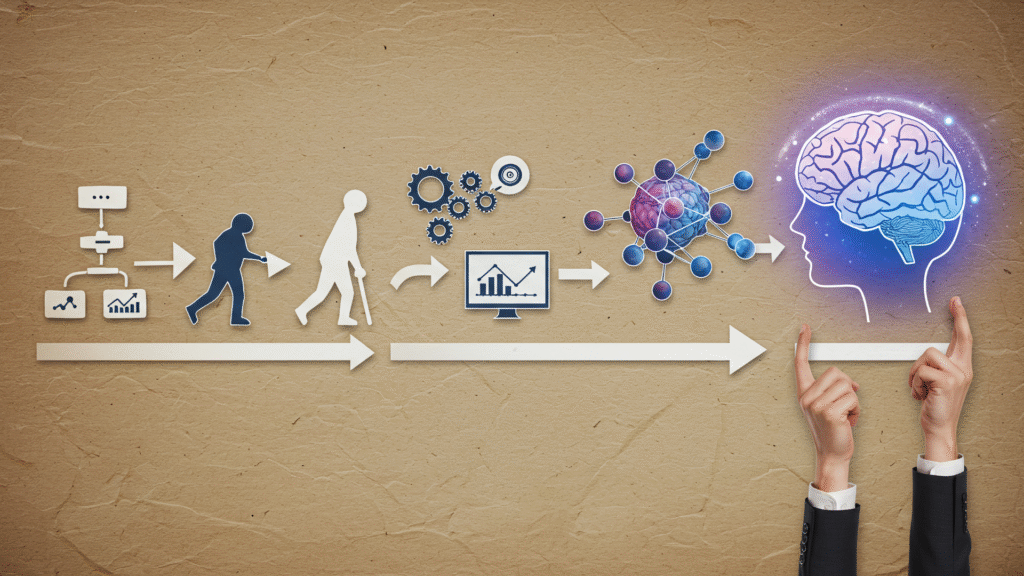
In 2025, the world of artificial intelligence has moved far beyond chatbots, automation tools, or simple virtual assistants. A new revolution has begun — the era of Autonomous AI Employees, also known as AI Workers, AI Agents, or Digital Employees. These are not just tools. They are fully capable, task-driven, self-managing digital workers that can perform real jobs inside real businesses — without human supervision.
From handling customer support and marketing to coding, sales outreach, HR tasks, finance, and project management, AI employees are becoming an essential part of modern companies. This guide explores how AI workers function, why businesses are adopting them at record speed, and how they are redefining the future of work.
What Are Autonomous AI Employees?
Autonomous AI Employees are fully capable digital agents that can:
✔ Understand goals
✔ Make decisions
✔ Complete multi-step tasks
✔ Work across different apps
✔ Chat, speak, email, and execute actions
✔ Learn from past interactions
✔ Operate 24/7 without breaks
They are powered by:
Advanced large language models (LLMs)
Reasoning engines
Automated workflows
Memory systems
Tool use capabilities
APIs & software integrations
In simple words, AI employees act like digital team members who can perform tasks a human worker normally does — but faster, cheaper, and without errors.
Why Autonomous AI Employees Are Exploding in 2025
1. They Reduce Business Costs by 70–90%
Hiring humans is expensive.
Training them is expensive.
Managing them is even more expensive.
An AI employee:
Has no salary
Doesn’t need training
Doesn’t need a manager
Works instantly after setup
Does not quit or take leaves
For startups and small businesses, this is one of the most cost-effective upgrades in history.
2. They Work 24/7 Without Breaks
Human employees need rest, holidays, and weekends.
AI employees:
Work around the clock
Never get tired
Never get sick
Never lose focus
This leads to unmatched productivity and faster results.
3. They Are Highly Accurate and Error-Free
AI employees don’t forget tasks, make fewer mistakes, and follow instructions perfectly.
Industries using AI workers report:
90% fewer operational errors
75% faster task completion
Consistent results every time
This level of reliability is transforming business operations.
4. They Can Handle Multiple Roles at Once
One AI employee can serve as:
A customer service agent
A marketing specialist
A content writer
A data analyst
A sales assistant
A project manager
All simultaneously.
Something impossible for a human.
Top Tasks AI Employees Can Perform in 2025
1. Customer Support
AI workers can:
Answer FAQs
Solve issues
Process returns
Track orders
Respond on WhatsApp, email, and calls
They provide fast, personalized support for thousands of customers at the same time.
2. Social Media & Marketing
They can:
Plan content calendars
Write posts
Analyze trends
Schedule content
Run ad campaigns
Monitor engagement
Businesses now rely on autonomous AI marketers for daily operations.
3. Content Creation
AI workers can write:
Blogs
Captions
Emails
Scripts
SEO content
Landing pages
They ensure consistency and save hundreds of hours every month.
4. Sales & Lead Generation
AI employees can:
Find leads
Email prospects
Follow up
Schedule meetings
Update CRMs
Answer product questions
Some businesses run fully automated sales departments using only AI workers.
5. Finance & Admin Tasks
They manage:
Data entry
Invoice processing
Vendor communication
Record keeping
Budgeting assistance
This removes repetitive work from human staff.
6. Website & App Development
Some AI agents can:
Code
Fix bugs
Deploy applications
Test features
Monitor systems
Developers now rely heavily on AI coworkers to speed up production.
Best Autonomous AI Employee Tools in 2025
These are the top AI worker platforms transforming businesses this year:
1. Devin AI (Autonomous Software Engineer)
A fully capable AI engineer that writes code, builds apps, and completes software tasks end-to-end.
2. AutoGPT Enterprise
A multi-agent system that performs cross-department tasks without supervision.
3. Taskade AI Agents
Ideal for marketing, research, and workflow automation.
4. MagicAgent.ai
An AI employee that handles sales, schedules, CRM, and outreach.
5. Adala AI Workforce
A complete AI employee ecosystem for enterprise-level operations.
These tools are becoming the backbone of modern digital companies.
How AI Employees Transform Business Operations
1. Faster Growth With Fewer Human Workers
Companies use 1–5 human managers and 20–200 AI employees.
This model reduces cost while increasing output.
2. Scalable Workflows Without Hiring
Every time a business needs more support or marketing, it simply deploys more AI employees.
No recruiters.
No interviews.
No onboarding.
Growth becomes frictionless.
3. Better Customer Experience
AI employees respond in seconds, personalize support, and never lose patience.
This leads to:
Higher conversions
Better retention
Positive reviews
Happy customers = higher profit.
4. More Creativity & Strategy from Human Workers
AI handles repetitive tasks.
Humans focus on:
Innovation
Leadership
Strategy
Relationship building
This hybrid model increases company efficiency significantly.
Are AI Employees Replacing Humans?
Yes and no.
AI employees replace:
Repetitive tasks
Routine support
Data entry
Scheduling
Admin work
But humans are still needed for:
Complex decision-making
Creative direction
Team leadership
Emotional intelligence
Strategy
The future is AI + Human collaboration, not competition.
Industries Using AI Employees in 2025
E-commerce
Tech startups
Marketing agencies
Real estate
Finance
Healthcare
Logistics
Education
Every industry is adopting AI workers to stay competitive.
The Future of Autonomous AI Employees
By 2030:
60% of business operations will be managed by AI
AI employees will run marketing, HR, and sales
AI engineering teams will build apps automatically
Most small businesses will operate with minimal human staff
The companies adapting now will lead the next decade.
Conclusion
Autonomous AI employees are not just a trend — they are the next stage of business evolution. They help companies reduce costs, improve productivity, and scale faster than ever before. Whether you’re a small business owner, freelancer, or startup founder, integrating AI workers into your workflow can give you an unfair advantage in 2025 and beyond.
AI employees are the future of work — and that future is already here.